

What Is UAV Inspection and Why Are Industries Switching to Drones?
Industrial inspection has always been a critical part of maintaining safety, performance, and compliance across sectors such as oil & gas, power generation, infrastructure, marine, and manufacturing. Traditionally, inspections relied heavily on scaffolding, rope access, shutdowns, and manual visual checks. While effective, these methods are often time-consuming, costly, and risky.
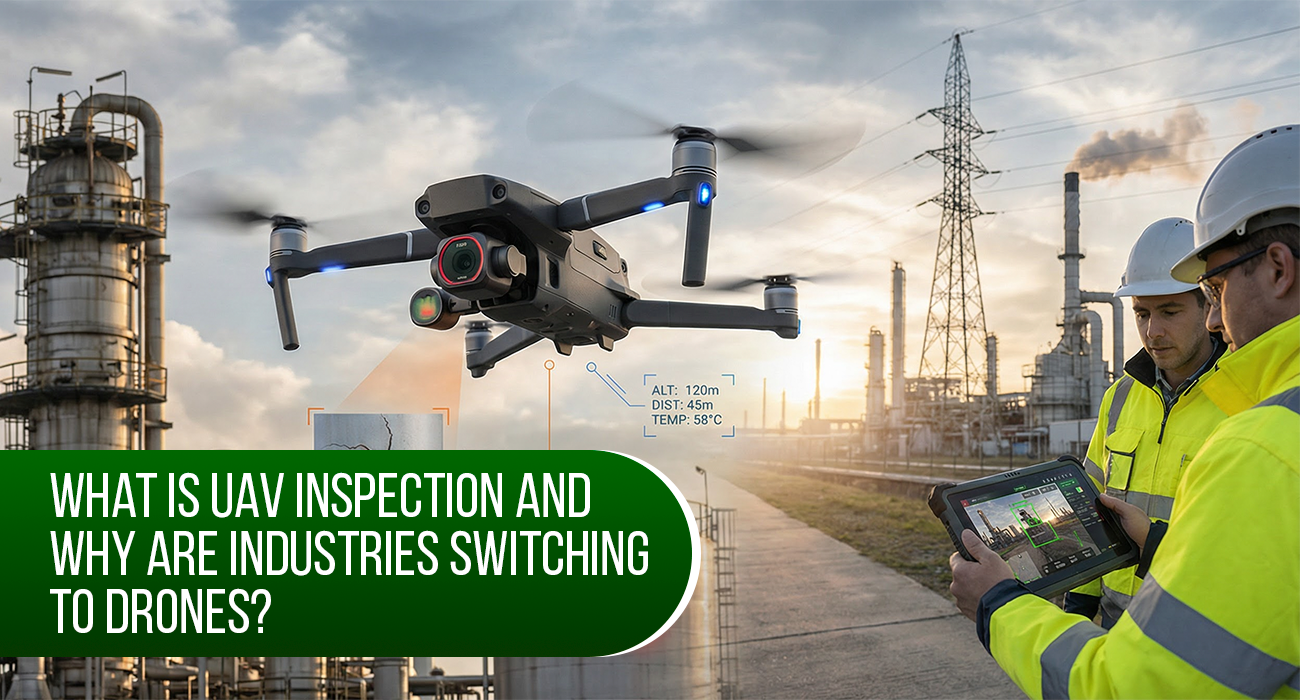
Today, industries are rapidly adopting drone-based inspection technologies to modernize their testing and inspection programs. This shift is driven by the need for safer operations, faster data collection, and more accurate reporting. At the center of this transformation is UAV Inspection, a method that uses unmanned aerial vehicles equipped with advanced sensors and cameras to examine hard-to-reach or hazardous assets.
Companies like Cornerstone Middle East, known for their comprehensive testing and inspection services, are helping organizations integrate drone inspections into existing quality assurance frameworks. By combining UAV technology with established non-destructive testing (NDT) practices, industries can achieve higher inspection standards while significantly reducing operational risks.
This article explores what UAV Inspection really is, how it fits into modern testing and inspections, and why industries across the Middle East and beyond are making the switch.
Understanding UAV Inspection in Industrial Testing
UAV Inspection refers to the use of drones to perform visual and sensor-based assessments of industrial assets. These drones are equipped with high-resolution cameras, thermal imaging systems, LiDAR, and other payloads that capture detailed data without requiring inspectors to physically access elevated or confined spaces.
In traditional inspection environments, technicians often need scaffolding, cranes, or rope access to inspect flare stacks, storage tanks, bridges, wind turbines, or chimneys. These setups can take days to prepare and introduce safety risks. UAV-based inspections eliminate many of these challenges by allowing trained operators to capture inspection-grade imagery from the ground.
What makes UAV technology especially powerful is its compatibility with existing testing methodologies. The collected data can support visual testing (VT), corrosion assessment, coating evaluation, and structural integrity reviews. When paired with certified inspectors and engineering analysis, drone data becomes a reliable input for condition monitoring and asset management programs.
Organizations such as Cornerstone Middle East integrate UAV workflows into broader inspection strategies, ensuring that drone-derived information meets industry standards and client compliance requirements.
The Role of UAVs in Modern Testing and Inspection Frameworks
Testing and inspection are no longer limited to manual observation. Today’s industrial environments demand data-driven decision-making, predictive maintenance, and continuous monitoring. UAVs have become an essential part of this evolution.
Drone inspections provide repeatable, high-quality data that can be archived and compared over time. This allows engineers to track asset degradation, identify early signs of corrosion or cracking, and plan maintenance before failures occur. Unlike one-time visual checks, UAV inspections support long-term condition-based maintenance strategies.
Another key advantage is accessibility. Drones can reach areas that are difficult or dangerous for humans, including offshore platforms, tall stacks, confined spaces, and unstable structures. This makes UAV Inspection particularly valuable in sectors where operational continuity and safety are paramount.
By incorporating UAVs into testing programs, service providers like Cornerstone Middle East help clients reduce downtime while maintaining rigorous inspection quality.
Why Industries Are Rapidly Switching to Drone-Based Inspections
The move toward drone inspections is not a passing trend. It is a strategic shift driven by measurable operational benefits.
Enhanced Safety Standards
One of the strongest reasons for adopting UAV Inspection is improved safety. Traditional inspections often expose personnel to heights, hazardous gases, extreme temperatures, or confined spaces. Drones remove inspectors from these environments, significantly reducing the risk of accidents and injuries.
For industries operating under strict health and safety regulations, this alone justifies the investment in UAV technology.
Reduced Operational Downtime
Many conventional inspections require partial or full shutdowns of equipment. With drone inspections, assets can often remain operational while data is collected. This minimizes production losses and keeps facilities running smoothly.
This is particularly beneficial for refineries, power plants, and large industrial facilities where downtime translates directly into financial loss.
Faster Data Collection and Reporting
Drone inspections can be completed in hours instead of days. High-resolution images and videos are captured quickly and processed using specialized software to generate detailed inspection reports.
When combined with experienced engineering teams like those at Cornerstone Middle East, UAV data is transformed into actionable insights that support maintenance planning and compliance documentation.
Applications of UAV Inspection Across Key Industries
The versatility of UAV Inspection makes it suitable for a wide range of sectors. Each industry benefits in unique ways, but the underlying value remains consistent: safer, faster, and more accurate inspections.
Oil and Gas Facilities
In oil and gas operations, drones are used to inspect flare stacks, pressure vessels, pipelines, and storage tanks. UAVs help detect corrosion, coating damage, and structural anomalies without requiring shutdowns or scaffolding.
These inspections support integrity management programs and help operators comply with regulatory requirements.
Power Generation and Utilities
Power plants and transmission networks rely on drones to inspect cooling towers, chimneys, substations, and overhead lines. Thermal imaging can identify hotspots, insulation failures, and connection issues that may lead to outages.
Integrating UAV inspections into routine maintenance helps utilities improve reliability while reducing inspection costs.
Infrastructure and Construction
Bridges, high-rise buildings, and industrial structures are increasingly inspected using drones. UAVs provide detailed visual records that support structural assessments, progress monitoring, and post-construction evaluations.
This approach enhances quality control while minimizing disruption to surrounding environments.
Integrating UAV Inspection with Traditional NDT Methods
While drones offer powerful visual capabilities, they do not replace traditional non-destructive testing methods. Instead, they complement them.
A professional inspection program often combines UAV Inspection with techniques such as ultrasonic testing, magnetic particle inspection, radiography, and thickness measurement. Drones are typically used for initial visual assessments and area mapping, helping inspectors identify locations that require closer examination using contact-based NDT tools.
Service providers like Cornerstone Middle East follow this integrated approach, ensuring that UAV inspections align with established testing standards and deliver reliable results.
This hybrid model maximizes efficiency while preserving technical accuracy.
Data Quality, Analysis, and Reporting
Collecting drone footage is only the first step. The real value lies in interpreting that data correctly.
High-resolution imagery captured during UAV inspections is analyzed by certified inspectors and engineers. Specialized software helps identify defects, measure dimensions, and compare current conditions with historical records.
Reports generated from these inspections include annotated images, defect classifications, and engineering recommendations. These documents become part of an organization’s asset integrity records, supporting audits, maintenance planning, and regulatory compliance.
By combining UAV technology with expert analysis, Cornerstone Middle East delivers inspection outcomes that go beyond visuals, offering meaningful insights for asset owners.
Regulatory Compliance and Quality Assurance
Industries operating in sectors such as oil & gas and power generation must adhere to strict inspection standards. Drone inspections must therefore meet the same quality and documentation requirements as traditional methods.
Professional UAV inspection services follow aviation regulations, safety protocols, and inspection standards. Pilots are trained and certified, flight plans are risk-assessed, and data handling processes are controlled.
When delivered by experienced providers, UAV Inspection becomes a fully compliant component of industrial quality assurance systems.
Cost Efficiency and Long-Term Value
Although UAV systems require initial investment, the long-term financial benefits are substantial. Reduced scaffolding, fewer shutdowns, faster inspections, and improved safety all contribute to lower operational costs.
More importantly, early defect detection helps prevent catastrophic failures and extends asset life. This proactive approach saves organizations millions in unplanned repairs and downtime.
Companies partnering with Cornerstone Middle East often see measurable returns through optimized maintenance strategies and enhanced operational resilience.
The Future of UAV Inspection in Testing and Inspections
As drone technology continues to evolve, its role in industrial inspection will expand further. Artificial intelligence is already being used to automate defect detection, while advanced sensors are enabling more precise measurements.
Future UAV platforms will likely integrate seamlessly with digital asset management systems, providing real-time condition monitoring and predictive analytics.
For industries focused on safety, efficiency, and sustainability, UAV Inspection represents a critical step toward smarter operations.
Why Choose Cornerstone Middle East for UAV-Based Inspection Services
With extensive experience in testing, inspection, and certification, Cornerstone Middle East brings engineering expertise to every UAV project. Their approach combines advanced drone technology with certified inspectors, ensuring that clients receive reliable data and professional analysis.
By integrating UAV inspections into comprehensive testing frameworks, they help organizations improve asset integrity, meet regulatory requirements, and achieve operational excellence.
Their commitment to quality, safety, and innovation makes them a trusted partner for industries transitioning to modern inspection solutions.
Conclusion
The industrial world is changing, and inspection practices are evolving with it. Drone technology has introduced a safer, faster, and more efficient way to assess critical assets without compromising quality.
Through UAV Inspection, industries can reduce risk, minimize downtime, and gain deeper insight into asset conditions. When combined with traditional testing methods and expert engineering analysis, UAV inspections become a powerful tool for proactive maintenance and compliance.
Organizations like Cornerstone Middle East are leading this transformation by delivering integrated inspection solutions that meet today’s operational demands while preparing clients for the future.
As industries continue to prioritize safety, reliability, and cost efficiency, UAV-based inspections will remain at the forefront of modern testing and inspection strategies, reshaping how assets are monitored, maintained, and protected for years to come.


Post a comment