

Everything You Need to Know About Duct Leakage Test: How It Works, Why It Matters, and What to Expect
When it comes to maintaining the performance and energy efficiency of any building’s HVAC system, one procedure stands out as both fundamental and frequently overlooked — the duct leakage test. Whether you manage a commercial property in Dubai, operate an industrial facility in Bahrain, or oversee a residential complex across the GCC, duct integrity is directly tied to energy costs, indoor air quality, and occupant comfort. Yet many building owners and facility managers only discover a leakage problem after their utility bills have quietly escalated over months or years.
A duct leakage test is a precise diagnostic procedure designed to measure how much air escapes from an HVAC duct system before it reaches its intended destination. Even a small percentage of air loss through poorly sealed joints, cracked duct sections, or degraded insulation can translate into significant energy waste, uneven temperature distribution, and contamination of the indoor air supply. Understanding what this test involves, why it is necessary, and how often it should be conducted can save building owners considerable time, money, and operational disruption in the long run.
This blog offers a comprehensive look at the duct leakage test — what it is, how the process works, what standards govern it, the consequences of ignoring it, and why engaging qualified professionals like Cornerstone Middle East is the smartest investment you can make for your building’s HVAC health.
What Is a Duct Leakage Test?
At its core, a duct leakage test is a controlled measurement of the unintended air loss occurring within an HVAC duct system. Duct systems are designed to transport conditioned air — whether cooled, heated, or ventilated — from the air handling unit to various zones within a building. When seams, joints, or duct material develop gaps or cracks, a portion of that conditioned air escapes into unconditioned spaces such as ceiling voids, wall cavities, or mechanical rooms. This escaped air never serves its intended purpose, yet the HVAC system continues to consume energy to produce it.
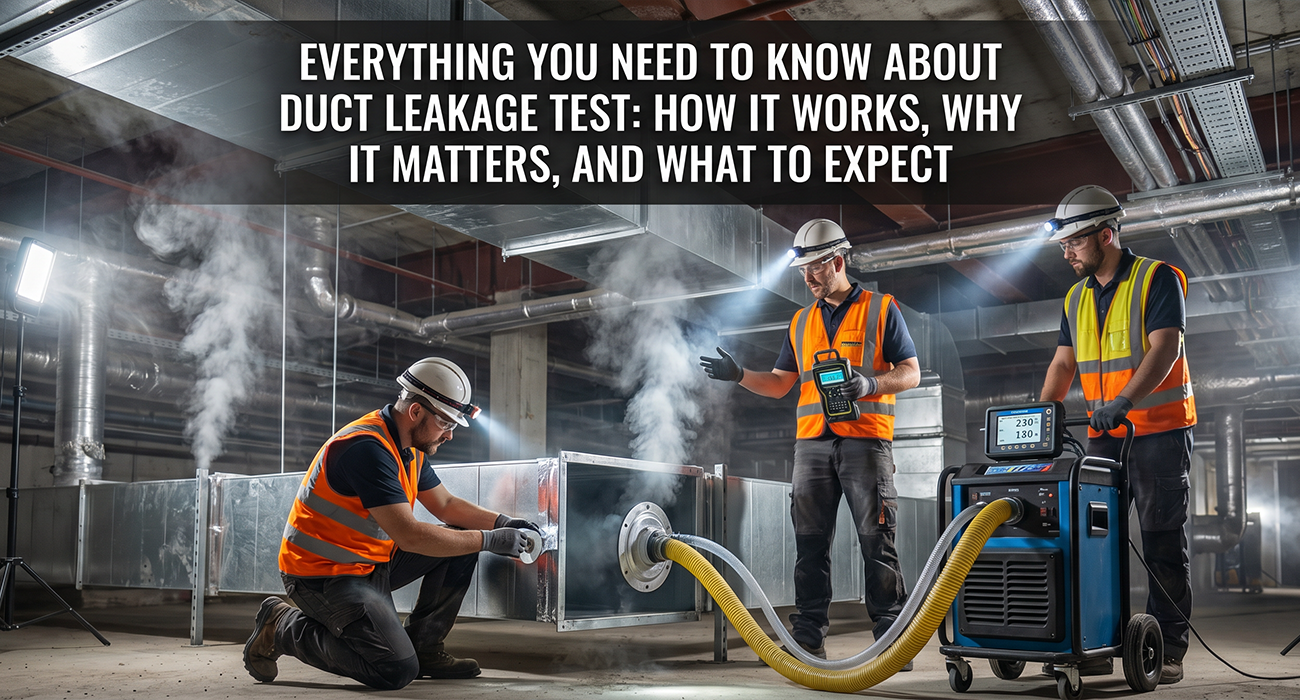
The duct leakage test quantifies how significant this problem is in a given system. Technicians typically use one of two primary methods: a pressurization test, where the duct system is pressurized and the airflow required to maintain that pressure is measured to determine leakage rate, or a smoke-based diagnostic test, where non-toxic smoke is introduced into the system to visually reveal exactly where leaks are occurring. Both methods provide actionable data that building engineers and facility managers can use to prioritize repairs and measure improvement after those repairs are carried out.
Why the Duct Leakage Test Is More Important Than You Think
Many people underestimate how much energy leaky ductwork actually wastes. Industry data consistently indicates that duct systems with poor sealing can lose between 20% and 30% of the conditioned air being circulated. In the climate conditions typical to the UAE and GCC — where cooling demands are extreme for the majority of the year — this translates directly into enormous energy waste and inflated operational costs.
Beyond energy consumption, the consequences of skipping a regular duct leakage test extend into indoor air quality, occupant health, and regulatory compliance. When ducts leak, the pressure differential within the system can draw in unconditioned air from surrounding spaces. In a commercial building, this could mean drawing in dust, pollutants, or even microbial contaminants from ceiling voids into the supply air being delivered to occupied spaces. Over time, this leads to degraded indoor air quality, increased incidence of respiratory complaints among occupants, and potential non-compliance with health and safety standards.
There is also the matter of HVAC system lifespan. When a system is compensating for consistent air loss, it runs harder and longer to meet set-point temperatures. This increased operational load accelerates wear on components like compressors, fans, and motors, shortening the system’s useful life and increasing maintenance costs. A timely duct leakage test and the subsequent sealing work can significantly extend the operational life of an entire HVAC installation.
How the Duct Leakage Test Process Works
Understanding the step-by-step process of a duct leakage test helps building managers know what to expect when scheduling one and how to prepare. While methods can vary depending on the type of building and the scope of the test, the general procedure follows a structured sequence.
Initial Assessment and Preparation: Before any testing begins, qualified technicians conduct a preliminary evaluation of the duct system. This involves reviewing existing documentation, identifying the extent of the ductwork, and deciding which sections will be isolated for testing. All terminal devices — diffusers, grilles, and registers — are typically sealed temporarily to isolate the duct system from the occupied spaces.
Pressurization and Measurement: For quantitative leakage measurement, the duct system is connected to a calibrated fan that pressurizes the ductwork to a specific static pressure — commonly 25 Pascals or another standard test pressure. The flow of air required to maintain that pressure is recorded. Since a perfectly sealed system would require zero additional airflow to maintain pressure, any measured airflow indicates leakage. The result is typically expressed as a percentage of total system airflow or as a leakage rate per unit of duct surface area.
Smoke-Based Diagnostic Testing: When the goal is not just to measure leakage but to locate it precisely, technicians introduce non-toxic, food-grade smoke into the duct system. As the smoke travels through the ductwork under pressure, it escapes through gaps, unsealed joints, or defective components. Technicians visually track where the smoke appears outside the ducts, pinpointing the exact location of each leak. This method is particularly valuable before remediation work, as it eliminates guesswork and ensures that sealing efforts are directed at the right locations.
Documentation and Reporting: A professional duct leakage test is followed by detailed reporting. Technicians document all measurements, the locations of identified leaks, photographs or video footage of smoke escaping, and a prioritized list of recommended repairs. This report serves as both an audit record and an action plan for remediation.
Follow-Up Verification: After sealing and repair work has been completed, a follow-up duct leakage test confirms that the corrective measures have been effective. This verification step is essential for compliance purposes and ensures that the money spent on remediation has achieved the desired outcome.
Standards That Govern Duct Leakage Testing
Duct leakage testing is not an ad hoc process — it is governed by internationally recognized standards that define acceptable leakage limits, testing procedures, and reporting requirements. Understanding these standards helps building owners ensure that the testing they commission is rigorous, credible, and aligned with green building certification requirements.
SMACNA HVAC Air Duct Leakage Test Manual is one of the most widely referenced standards globally. It provides detailed guidelines for testing the leakage of HVAC duct systems, including acceptable leakage classifications and testing methodologies. Buildings aiming for compliance with this standard must demonstrate that their duct systems meet specified leakage classes based on the design pressure of the system.
ASHRAE 152 provides a method of test for determining the design and seasonal efficiencies of residential thermal distribution systems, incorporating duct leakage as a key input into overall system efficiency calculations. This standard is especially relevant for residential and light commercial applications.
NEBB Procedural Standards (National Environmental Balancing Bureau) and AABC National Standards (Associated Air Balance Council) both address duct leakage within the broader context of balancing and commissioning HVAC systems. These standards ensure that duct leakage testing is integrated into a holistic performance evaluation rather than treated in isolation.
For buildings pursuing green building certifications such as LEED, BREEAM, Estidama, or GSAS in the GCC region, duct leakage performance directly impacts energy credits and sustainability scores. Conducting a rigorous duct leakage test and achieving low leakage rates is an important step in meeting those certification thresholds.
Common Causes of Duct Leakage
Knowing what causes duct leakage in the first place allows facility managers to address root causes rather than merely treating symptoms. Several factors contribute to duct leakage, and many are related to installation quality, material aging, and maintenance practices.
Poor installation workmanship is one of the most common causes. When ductwork is installed hastily or without proper attention to joint sealing, connections may appear visually acceptable but fail under operating pressures. Joints that are not properly mechanically fastened and sealed with appropriate duct mastic or tape will gradually open up over time as the system cycles between pressurized and depressurized states.
Material degradation is another significant factor. Flexible ductwork, commonly used in residential and light commercial settings, can develop cracks or perforations over time due to physical damage, pest intrusion, or UV exposure in exposed areas. Rigid sheet metal ductwork may corrode at joints, particularly in high-humidity environments, causing the sealant to fail. Thermal expansion and contraction cycles also contribute to joint fatigue over the years.
Renovation and modification work is a frequently overlooked cause of new leakage in previously sound systems. When walls are opened, ceilings are lowered, or HVAC systems are extended or reconfigured, ductwork may be cut, repositioned, or reconnected without the same level of care as the original installation. A duct leakage test following any significant renovation is therefore highly advisable.
Duct Leakage Testing in the Context of GCC Buildings
The UAE and broader GCC region present a unique set of challenges for HVAC performance. Extreme summer temperatures — regularly exceeding 45°C — place HVAC systems under continuous heavy load for extended periods. In this context, even a moderate leakage rate in a building’s duct system has a far more pronounced impact on energy costs and system performance than it would in a more temperate climate.
Dubai’s Green Building Regulations, Abu Dhabi’s Estidama Pearl Rating System, and Saudi Arabia’s Green Building Code all contain requirements related to HVAC performance and energy efficiency that make the duct leakage test a directly relevant compliance tool. Developers and building owners pursuing certification under these frameworks, or seeking to meet local energy codes, cannot afford to overlook the state of their duct systems.
In Bahrain, Qatar, Kuwait, and Oman, similar regulatory momentum toward energy-efficient buildings is growing steadily. The duct leakage test is becoming an increasingly common requirement not just at commissioning but as part of ongoing facility management and energy auditing programs.
How Cornerstone Middle East Delivers Duct Leakage Testing Excellence
When it comes to conducting a rigorous, standards-compliant duct leakage test across the UAE and GCC, Cornerstone Middle East stands out as a trusted technical partner. Based in Dubai, Cornerstone is a premier provider of engineering testing and consulting services, with a multidisciplinary team that brings years of specialized experience to every project.
Cornerstone Middle East utilizes advanced smoke testing equipment to not only measure duct leakage quantitatively but also to visually identify and document every leak location with precision. Their approach goes beyond simply generating a number — it produces a comprehensive, actionable report complete with visual documentation, detailed findings, and a prioritized repair roadmap. This level of thoroughness ensures that building owners and facility managers have everything they need to address leakage problems efficiently and cost-effectively.
Their team adheres strictly to internationally recognized standards including SMACNA, ASHRAE 152, and NEBB Procedural Standards, ensuring that the duct leakage test results they produce are credible, defensible, and accepted by building authorities and green certification bodies alike. Cornerstone’s coverage extends across major GCC markets including Qatar, Saudi Arabia, Oman, Kuwait, and Bahrain, making them a single reliable partner for regional portfolios.
What further distinguishes Cornerstone Middle East is their commitment to tailored solutions. They recognize that no two buildings are identical, and their testing plans are customized to the specific configuration, pressure class, and use type of each duct system they evaluate. Whether you manage a large commercial tower, a healthcare facility, an educational campus, or an industrial installation, their team brings the expertise and equipment necessary to deliver reliable duct leakage test results that genuinely inform decision-making.
How Often Should You Conduct a Duct Leakage Test?
The frequency of duct leakage testing depends on the type of building, the age of the ductwork, and the operational demands placed on the system. As a general guideline, a duct leakage test should be conducted at the time of initial commissioning for any new building, following any major renovation or HVAC modification, and periodically throughout the building’s operational life — typically every three to five years for commercial and institutional buildings.
Buildings that have experienced unusual increases in energy consumption, complaints about temperature inconsistency, or deteriorating indoor air quality should prioritize a duct leakage test as part of the diagnostic process. Similarly, buildings that have undergone occupancy changes, internal reconfiguration, or pest control treatments may have had their ductwork disturbed in ways that are not visually obvious but affect system integrity.
The Return on Investment of Duct Leakage Testing
It is natural for building owners to weigh the cost of a duct leakage test against its perceived benefit. However, when viewed through the lens of long-term operational costs and building performance, the return on investment is consistently positive. Identifying and sealing a 20% duct leakage rate in a large commercial building in Dubai, for example, can reduce HVAC energy consumption by a corresponding percentage — a saving that accumulates month after month across the building’s operational life.
Beyond energy savings, a well-documented duct leakage test and remediation program contributes to higher building asset values, improved tenant satisfaction, extended HVAC equipment life, and stronger positioning for green building certification. These benefits collectively far exceed the investment in the testing and remediation work itself.
Conclusion
The duct leakage test is not a luxury item on a maintenance checklist — it is a foundational diagnostic tool that directly impacts energy efficiency, indoor air quality, occupant comfort, system longevity, and regulatory compliance. In the demanding climate conditions of the UAE and GCC, the stakes are even higher, making regular duct leakage testing an operational priority rather than an optional extra.
Whether you are commissioning a new building, managing an aging facility, or pursuing green building certification, partnering with a qualified and experienced testing provider makes all the difference. Cornerstone Middle East brings the technical expertise, industry-standard equipment, and region-specific knowledge required to deliver duct leakage test results you can trust — and act on. Their comprehensive approach, from initial smoke diagnostics through to detailed reporting and follow-up verification, ensures that every test they conduct translates into real, measurable improvements in building performance.
If you have not scheduled a duct leakage test for your building in recent years, now is the time to take that step. Visit www.cornerstonemiddleeast.com to learn more about their HVAC services or to request a consultation with their specialists.


Post a comment